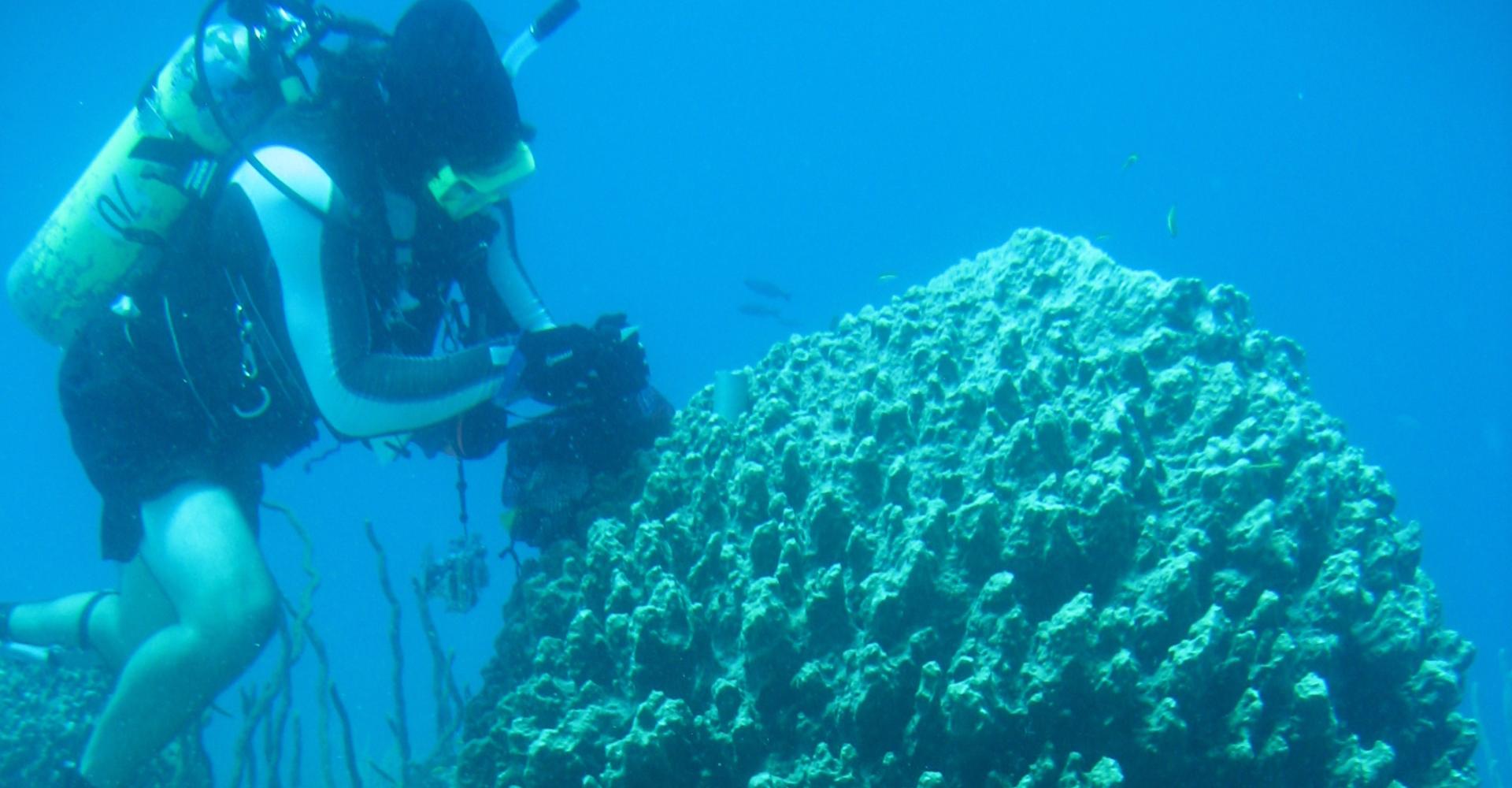
Research OverviewMarine Molecular Microbiology Marine biology uses the scientific method to study organisms that live in the ocean or other bodies of water. Molecular biology focuses on the structure and interaction of proteins, nucleic acids, and other molecules that carry out the processes required for life at the cellular level. Microbiology studies microorganisms and their interactions. So, putting this all together, marine molecular microbiology is focused on molecular studies of microorganisms that live in the ocean or other bodies of water. Microbial Symbiosis Because of their proximity to other organisms, microorganisms often become involved in close associations with others. When those close associations... Complete Information... | Research DescriptionResearch Area: Marine molecular biology Research Specialties: Marine actinomycete ecology and molecular biology, microbiology of marine natural products, bacterial and cyanobacterial symbionts of marine sponges, marine bacteriophages, metal resistance in actinomycetes and application in bioremediation. Research Interests Marine Microbiology and the Discovery of New Drugs The major focus of research in my laboratory is the investigation of symbiotic bacteria associated with marine invertebrates, in particular, sponges. Many important compounds with pharmaceutical potential have been discovered in sponges and other invertebrates. In some cases, the compounds of interest are produced, not by the sponges themselves, but by bacteria associated with the sponges. We are identifying many of the bacteria present in sponges even if we cannot grow them, by cloning the genes encoding the 16S ribosomal RNA from these sponges. We can then rationally select culture conditions to be able to grow a higher proportion of the bacteria and, hopefully, find the ones that produce important compounds. We have isolated a Micromonospora sp. strain M42 from the Indonesian sponge Acanthostrongylophora that produces manzamine A, an antimalarial compound found in... Complete Information... |
Representative PublicationsIlling, N., R. T. Hill, and D. R. Woods. 1988. Purification and characterization of glutamine synthetase from Nocardia corallina. Antonie van Leeuwenhoek. 54: 497-507. Hill, R. T., N. Illing, and D. R. Woods. 1989. Development of pLR591, a Streptomyces-Escherichia coli positive selection shuttle vector. FEMS Microbiol. Letts. 57: 223-226. Hill, R. T., S. Hart, N. Illing, R. Kirby, and D. R. Woods. 1989. Cloning and expression of Rhodococcus genes encoding pigment production in Escherichia coli. J. Gen. Microbiol. 135: 1507-1513. Complete Listing... |